
Artificial intelligence (AI) has arrived with the enthusiasm of a new neighbor who has already offered to reorganize your garage, write your résumé, diagnose your cat, and explain quantum physics—all before you have learned its name. Depending on whom you ask, AI is either the greatest invention since sliced bread or a suspiciously confident autocomplete machine with access to the entire internet.
The truth, as usual, is less dramatic and more interesting. AI can be useful, impressive, biased, energy-hungry, occasionally wrong, and strangely gifted at writing emails that sound exactly like an email no one wants to receive. In this article, we move beyond the buzzwords, glowing promises, and robot-apocalypse movie trailers to address the practical questions raised by participants at a recent UNH Osher Lifelong Learning (OLLI) class I facilitated.
What is AI?
AI is neither a magical oracle nor a metal overlord waiting to steal your toaster. The non-technical answer is: It is a powerful set of tools that have been around since can spot patterns, generate content, automate routine work, and occasionally produce an answer with the confidence of a contestant who has not read the question.

The technical answer is a bit more revealing. AI at its core is intelligence built into a machine – a computer. Alan Turing gave us language for discussing this in his 1950 book “Computing Machinery and Intelligence” where he proposed the famous “Turing Test” for machine intelligence.
The earliest known computer is the Antikythera mechanism, built in ancient Greece around 100 BCE. Using a remarkable system of bronze gears, it calculated astronomical cycles—including positions of celestial bodies and eclipses. It was recovered from a shipwreck near the Greek island of Antikythera in 1901. The first known machine resembling a general-purpose modern computer is Babbage’s Analytical Engine built in 1837.
There are 7 levels of AI:
Level 1: Rule-Based Systems (Reactive Machines): These machines operate entirely on hardcoded “if-then” logic. They have no memory, cannot learn, and can only respond to immediate inputs.
- Examples: Quickbooks. Smart Thermostats. IBM’s Deep Blue chess computer. Basic spam filters.
Level 2: Context Awareness & Retention (Limited Memory): These systems utilize historic data and machine learning to adjust behavior over time. They retain data for a short window to make predictions.
- Examples: Siri. Google, Netflix home page with recommendations. Autonomous vehicles (tracking nearby cars) or early chatbots.
Level 3: Domain-Specific Expertise (Narrow AI): AI that can ingest massive datasets to master an incredibly complex, singular field—often outperforming human specialists in that exact silo.
- Examples: Google DeepMind’s AlphaGo. AI medical screening tools. Bank fraud detectors. Grammarly. Canva.
Level 4: Reasoning & Reasoning-Based Systems (Agentic AI): Systems that understand subtle intent, context, and complex human prompts. They don’t just output text; they use “chain of thought” logic to solve multi-step problems and act as autonomous agents. This is referred to as “generative” AI.
- Examples: ChatGPT. Claude. Coding assistants.
Level 5: Theory of Mind (Socially Aware AI): A theoretical level where AI can understand human emotions, beliefs, psychology, and social dynamics, tailoring its interaction based on the user’s emotional state.
- Example: While still mostly in research labs, an everyday example would be a virtual therapist that can detect micro-expressions on your face, changes in your vocal pitch, and your typing speed to truly understand if you are anxious or depressed, adapting its entire personality to soothe you.
Level 6: Artificial General Intelligence (AGI): The holy grail of modern tech. AGI refers to a system that can learn, generalize, and apply knowledge across any intellectual task that a human can, without needing specialized retraining.
- Example: Theoretical; tech companies are heavily racing toward this milestone. Imagine hiring a remote employee who has no pre-existing training. On day one, they learn your custom company software, handle customer service, write marketing copy, and manage the accounting—all seamlessly adapting to new, completely unrelated tasks exactly like a smart human.
Level 7: Artificial Superintelligence (ASI): The final evolutionary stage where AI surpasses the collective cognitive capacity of the entire human race across all disciplines (science, creativity, social skills).
- Example: Completely theoretical sci-fi territory such as an AI that solves global climate change in minutes, creates entirely new fields of mathematics, invents cure-all medications, and manages global supply chains perfectly, operating at a intellectual speed that humans literally cannot comprehend.
So, think of AI as a functionality built into a computer interface you use. Even if you did not think you were using AI, you have been.
Why should I use AI?
You should use AI when it helps you do useful work—not because the internet has decided that every grocery list needs a chatbot. AI can help brainstorm ideas, create an outline, explain something in plain language, produce a first draft, suggest discussion questions, summarize material you are allowed to share, or generate realistic practice scenarios for a class. For educators and lifelong learners, it can be a productive assistant that never asks whether the meeting could have been an email.
The best use of AI is as a thought partner, not a substitute for thought. Let it offer possibilities; then bring your own experience, skepticism, values, and proofreading skills. Use it for low-stakes, reversible tasks where you can check the results. Do not hand it confidential material, major life decisions, or the keys to the kingdom. An example someone gave during my class was that they asked ChatGPT to plan a trip for them. A good rule is: ask AI for options, not absolution.
How do we know something is AI generated?
The inconvenient answer is that we often do not know with certainty. AI detectors can be useful signals, but they are not lie detectors for laptops. They can wrongly label human writing as AI-generated, and they can miss AI-generated material that has been edited.
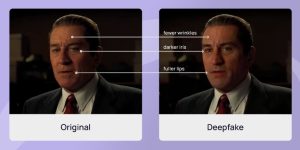 Photographers have a leg up in detecting these “deepfakes”. They are attuned to looking for clues such as overly polished language, suspiciously generic phrases, invented citations, strange image details such as shadows in the wrong place, or a voice that sounds like a motivational poster learned to type may justify a closer look—but none is proof.
The best evidence is provenance: disclosure from the creator, draft history, original files, trustworthy records, and content credentials when they are available. In schools and workplaces, it is more useful to establish clear expectations than to play “CSI: Paragraph.” Ask people to disclose substantial AI help, explain their process, identify their sources, and demonstrate that they understand the work they submit. The goal is honest authorship and sound learning, not catching someone for using a semicolon too confidently.
Is AI reliable?
AI can be reliable for focused tasks that have been thoroughly tested in stable conditions. It can help organize information, recognize patterns, translate common phrases, flag routine issues, and speed up repetitive work. But generative AI is not a truth machine. It produces likely-looking responses based on patterns in data, and it can confidently invent facts, sources, quotations, biographies, and sometimes what appears to be an entirely new branch of history (referred to as “hallucinations”).
Think of it as an enthusiastic intern who has read an astonishing amount, works at lightning speed, and occasionally makes something up rather than admitting, “I don’t know.” Important claims still need verification from reliable sources. High-stakes uses require testing, monitoring, security, transparency, an appeal process, and accountable human review. The rule is simple: verify before you rely. NIST’s AI risk guidance includes reliability, safety, security, explainability, privacy, fairness, and accountability among the qualities needed for trustworthy AI.
What about privacy?
Assume that what you type into a public AI tool is being shared with a third-party service, not whispered into a locked diary. Depending on the provider and settings, your prompts may be processed, retained, reviewed, or used under the terms of service. That means passwords, medical information, student records, client information, financial details, unreleased plans, and identifying personal data should stay out of the prompt box. If you would not put it on a postcard, do not casually give it to a chatbot.
A safer approach is to minimize and anonymize. Replace names with “[student]” or “[client],” remove unnecessary identifying details, and use fictional examples when possible. Before an organization adopts an AI system, it should examine the vendor’s data policies, retention practices, sharing options, security protections, and contractual commitments. Privacy is not a fussy add-on for people who alphabetize their spice racks; it is one of the central requirements of responsible AI.
What is the impact of Data Centers?
All computer systems live in data centers. Some are made up of just a handful of computers stored in a room the size of a closet. However, generative AI systems require hundreds of computers. They must be housed in enormous buildings packed with cables, cooling equipment, and enough blinking lights to make a 1980s science-fiction set jealous. These facilities make possible everything from video calls and online banking to medical research, streaming, and AI chatbots. But they consume electricity, sometimes water for cooling, land, construction materials, and capacity on local power grids. A new data center may bring construction jobs and tax revenue, but it can also leave communities asking, “Will this help us—or will it just make

our electric bill more exciting?”
The impact depends on the details. Is it powered by cleaner electricity? Is it energy efficient? Does it draw heavily on a community’s water supply? Is the company paying its fair share for grid improvements? The International Energy Agency expects data-center electricity demand to grow substantially through 2030, with AI playing a major role. So the goal is not to panic every time someone says “cloud.” The cloud is mostly other people’s computers in a building somewhere. The goal is to demand efficient design, clean energy, transparency, and sensible local planning.
What are the ethical considerations of AI?
In a recent NY Times article, Bill Gates warned that AI is more dangerous than Big Tech will admit, believing that the risks include mass unemployment and bioterrorism. AI ethics asks a very human set of questions: Who benefits? Who might be harmed? Who gets to decide? Important concerns include bias and discrimination, privacy and surveillance, misinformation and deepfakes, job disruption, intellectual property, consent, environmental costs, security, transparency, and responsibility when things go wrong. These issues are not theoretical. They affect whether someone gets a loan, is invited to an interview, receives accurate medical information, is targeted by a scam, or believes a video that was never real.
A practical checklist is helpful: Is this use beneficial and necessary? Is it fair? Are affected people told that AI is involved? Is their data protected? Can a person understand, question, and override the decision? Who is accountable for errors? And does the benefit justify the environmental and social cost? UNESCO’s AI ethics recommendation centers human rights and dignity, calling for fairness, transparency, privacy, accountability, sustainability, and human oversight. In other words: just because a machine can do something does not mean we should hand it the stapler and let it run the office.
Who is controlling AI?

A corollary to the question of ethics is who is controlling AI. Where’s the governance? The frustrating answer: No one person controls AI—not even the person in the office who keeps calling it “the algorithm,” as if it were a mysterious colleague who refuses to attend meetings. Power is shared, unevenly, among technology companies, cloud providers, chip manufacturers, universities, open-source developers, investors, governments, regulators, organizations that buy AI systems, and the public whose data, labor, and feedback shape the digital world.
Control also hides in design decisions. Someone chooses the data, the goals, the rules, the languages supported, the safety limits, the business model, and whether a human can override an automated decision. That is why AI governance matters. Good governance asks for transparency, accountability, public input, and meaningful human oversight. It should not mean, “Trust us; the dashboard has a nice logo.” UNESCO’s ethics framework emphasizes human rights, dignity, participation, and oversight across the life of an AI system.
Will AI crash and burn?
AI is unlikely to vanish in a dramatic puff of smoke while someone shouts, “It was all a hallucination!” It is already woven into many ordinary technologies, including spam filters, translation tools, fraud detection, accessibility features, logistics, and software systems. But individual AI companies, products, and breathless promises may certainly stumble. New technologies often follow a familiar pattern: enormous enthusiasm, unrealistic expectations, a few awkward headlines, tighter budgets, and finally a more practical understanding of what actually works.
The likely future is not “AI conquers humanity” or “AI becomes a decorative paperweight.” It is uneven adoption. Some uses will become indispensable; others will be expensive solutions in search of problems; and some will be limited because their risks are too high. The sensible question is not whether AI survives. It is whether a specific use produces enough real value to justify its financial, environmental, social, and human costs.
Final Thought
AI is not a magical brain in a box, nor is it a robot uprising scheduled for next Tuesday. It is a set of remarkably capable—if occasionally overconfident—tools that can help us write, learn, organize, create, and solve problems, provided we do not mistake polished sentences for wisdom or let it make important decisions unsupervised.
Behind every AI tool is a very real collection of data centers using energy, water, and enough equipment to make your home Wi-Fi router feel deeply inadequate. AI can be useful, but it also raises questions about privacy, bias, reliability, ownership, and who gets to make the rules. The sensible path is neither panic nor blind enthusiasm: use AI thoughtfully, protect personal information, verify important claims, insist on human accountability, and remember that when a chatbot sounds absolutely certain, it may simply be having one of those “confidently wrong” days.